Blog/Industry
Industry
Where church software is headed — and what we'd skip
Mobile-first design, sensible permissions, and tools that respect how churches actually work. Here's what we think matters in the next few years.
Ekklesia Team·September 18, 2026·9 min read
In this article
Church software has changed significantly.
But more features don't necessarily mean better software.
Church teams don't need another complicated system that requires weeks of training.
They need tools that understand how church administration actually works.
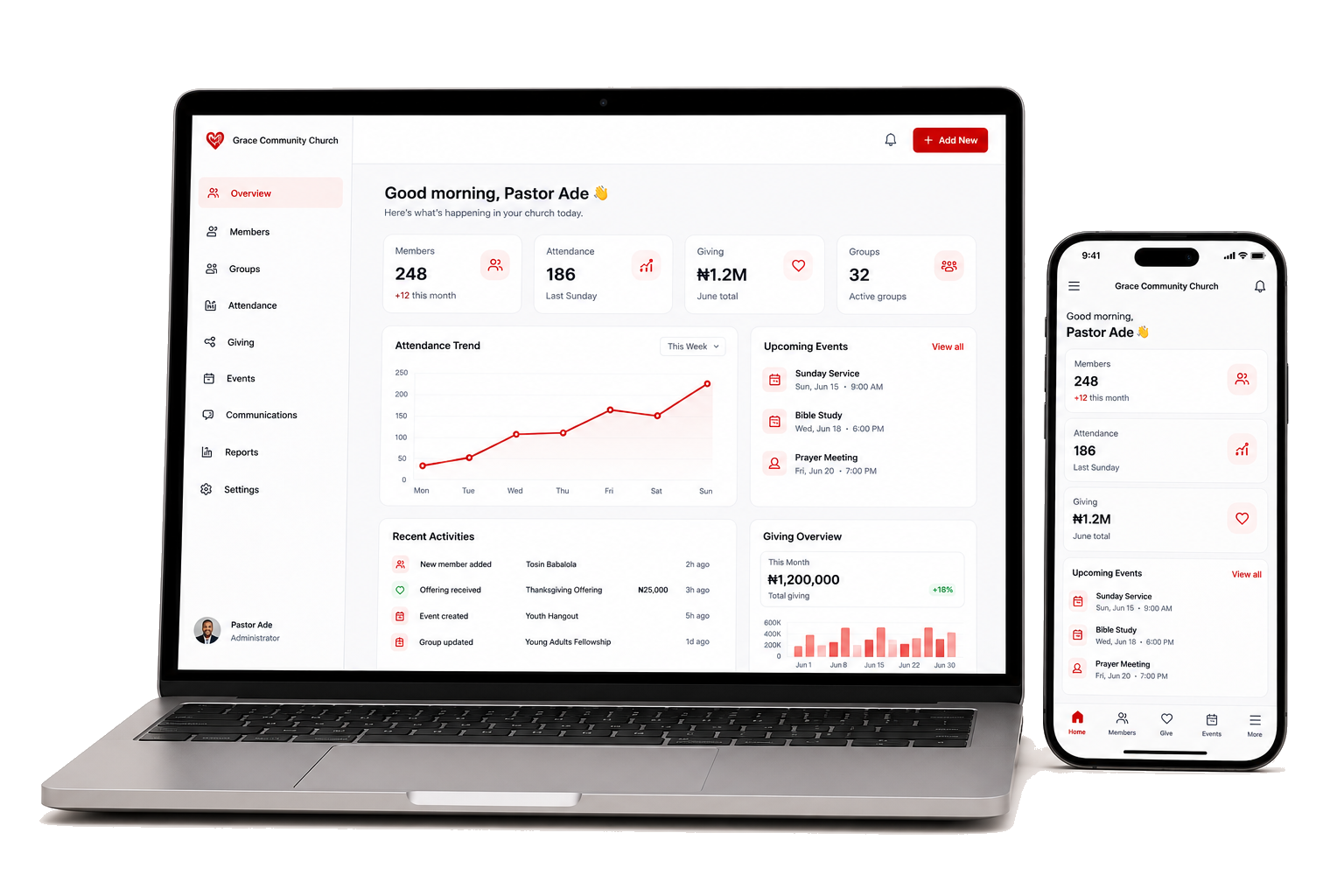
Mobile-first isn't optional
Church teams aren't sitting behind a desk all day.
Pastors move around.
Volunteers move around.
Ministry leaders move around.
The software needs to work where the people are.
Simplicity matters
A church platform can have hundreds of features and still be difficult to use.
We'd rather see fewer features that work extremely well than dozens of features nobody uses.
Permissions should make sense
Not everyone should have access to everything.
A volunteer shouldn't necessarily see financial information.
A branch administrator may need access to their branch without needing access to every branch.
Good permissions should reflect how churches are actually organised.
Data should belong to the church
Churches build relationships with their members over years.
Their data shouldn't feel trapped inside a platform.
Exporting information should be straightforward.
AI should solve real problems
AI will undoubtedly become part of church software.
But the question shouldn't be:
“Where can we add AI?”
It should be:
“What repetitive work can we remove?”
If technology saves a church administrator an hour every week, that's useful.
If it simply adds another complicated dashboard, it's not.
What we'd skip
We'd skip:
- feature overload
- complicated workflows
- unnecessary notifications
- technology for technology's sake
- systems that require an IT department to manage
Conclusion
The future of church software shouldn't be about making churches more corporate.
It should be about making administration lighter.
Better technology should help church teams spend more time doing the work that technology can't do:
serving people.